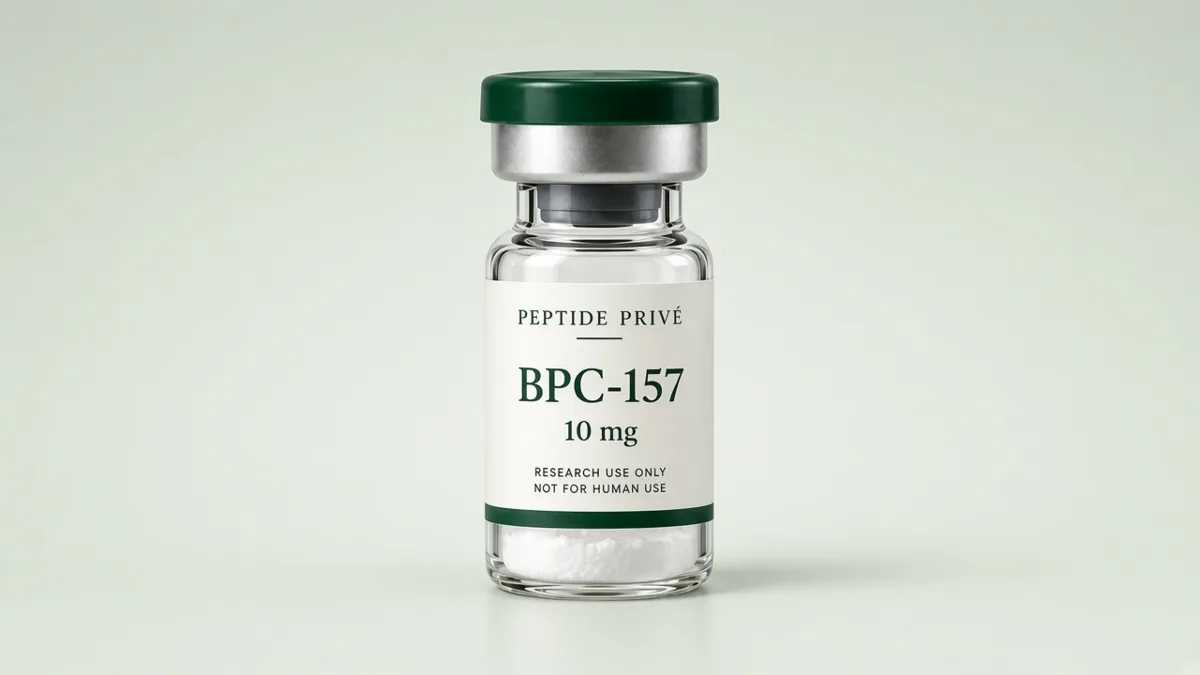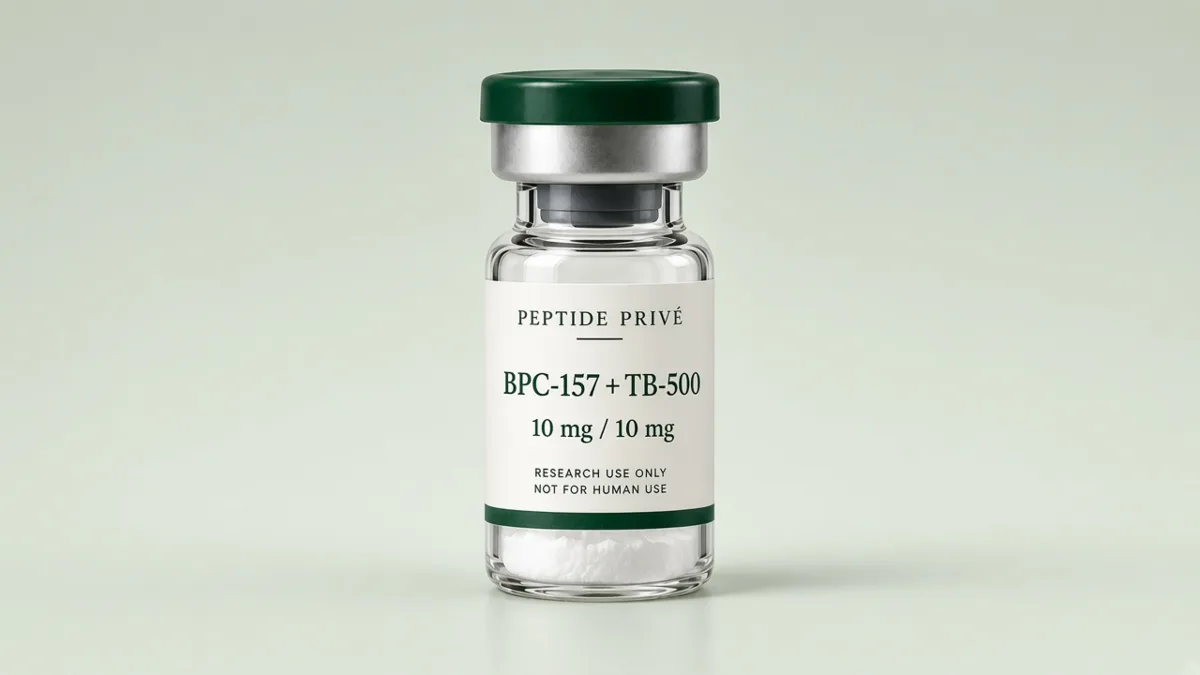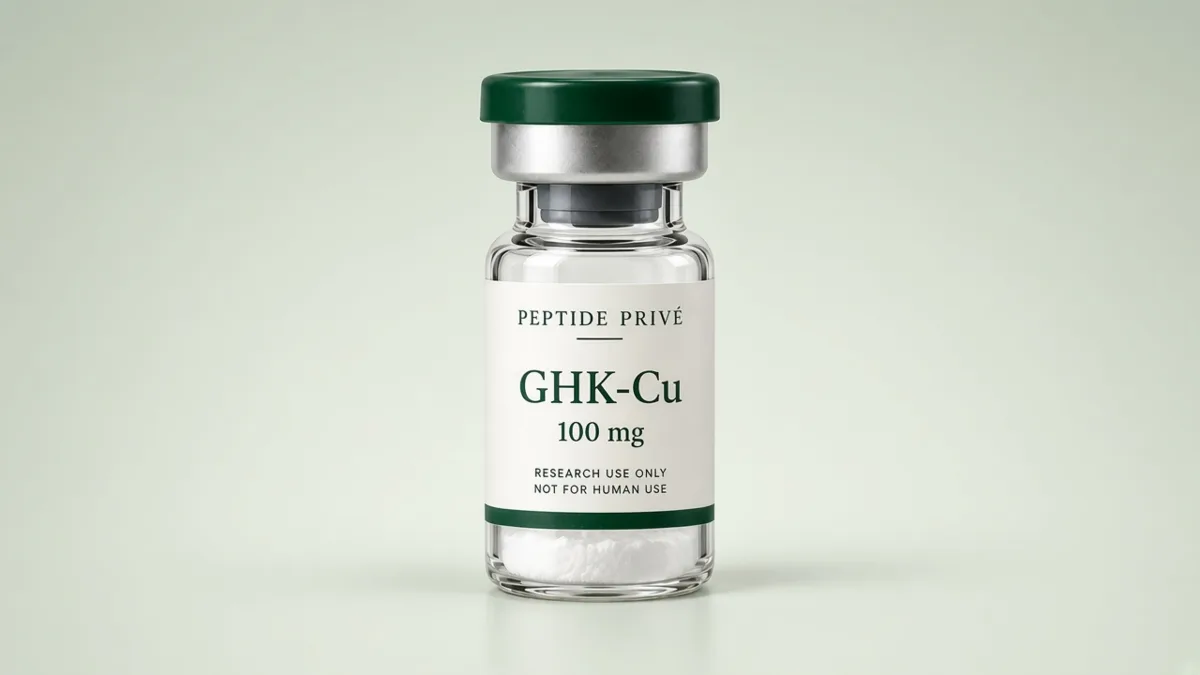
Research Use Only (RUO) is a labeling category for materials that are sold to support laboratory research. It tells the buyer how the product may be used and, just as importantly, how it may not.
What the Label Says
An RUO product is intended for in-vitro research and laboratory use by qualified professionals. It is not a drug, food, cosmetic or dietary supplement. It has not been evaluated or approved for use in humans or animals, and it is not intended for diagnosing or preventing any disease, or for any clinical purpose.
In practice, research materials are made for experiments: studies in cells and other laboratory systems run under a research protocol.
Where the Phrase Comes From
In U.S. regulation, the wording appears in the labeling rules for in vitro diagnostic products. A product in the laboratory research phase of development must carry the statement "For Research Use Only. Not for use in diagnostic procedures." (21 CFR 809.10(c)(2)(i)). The phrase has since become the common way to mark materials supplied for laboratory work.
In 2013 FDA issued a guidance document on distributing in vitro diagnostic products labeled RUO or Investigational Use Only. Its central point is that the label has to match how the product is actually intended and marketed; a research label on a product that is promoted for clinical use does not hold up (FDA 2013).
Intended Use: The Label Is Judged by Everything Around It
U.S. law looks at intended use to decide what a product is. FDA's regulation on the meaning of "intended uses" defines it as the objective intent of the people responsible for the product, and says that intent can be shown by their own statements, by the design or composition of the product, and by the circumstances of its sale, including labeling claims, advertising and oral or written statements (21 CFR 201.128). The 2013 RUO guidance applies the same idea and lists marketing statements, product design and how a product is sold and distributed as evidence of intended use (FDA 2013).
The practical consequence is simple. A research label is only meaningful if everything else a seller says and does is consistent with research use. Website copy, social posts, customer service replies and packaging all count.
Who Buys Research Materials
Typical buyers include university and institutional laboratories, contract research organizations, analytical labs and independent researchers working under appropriate protocols. Buyers are responsible for using the material lawfully and safely, under their institution's rules for chemical handling, storage and waste.
What Comes with an RUO Product
A research label comes with documentation, not directions. Expect:
- a batch (lot) number on the vial, linking it to its analytical report;
- identity and specifications, such as CAS number, molecular formula and molar mass;
- an analytical report for the lot, showing identity and purity;
- storage information.
You should not expect usage directions, amount charts or personal-use instructions. Those do not belong on a research material.
What RUO Is Not
- It is not a quality grade. The label describes intended use, not purity. Purity and identity are documented separately, for example in a lab report for a specific lot. See The Label Is Not the Test.
- It is not a loophole. Marketing an RUO product for personal or clinical use is not allowed, and suppliers that do so put buyers at risk.
- It is not medical guidance. Suppliers of research materials cannot advise on personal use of any kind.
- It is not a regulatory approval. An RUO label means a product has not been through review for clinical use.
How Pharmaceutical Quality Rules Relate to Research Materials
Readers often ask whether research peptides are covered by the quality guidelines used for medicines. Mostly they are not, and even within medicines, synthetic peptides sit in a gap:
| Framework | What it covers | Synthetic peptides? |
|---|---|---|
| ICH Q3A(R2), impurities in new drug substances | Chemically synthesized new drug substances | Peptides are explicitly excluded from its scope |
| ICH Q6B, specifications for biotechnological products | Proteins and polypeptides from cell-culture systems | Synthetic peptides are explicitly excluded |
| FDA guidance on ANDAs for certain synthetic peptides (2021) | Specific generic peptide drug applications | Yes, for those products only |
| USP general chapter 1503 | Quality attributes of synthetic peptide drug substances | Yes, for pharmacopeial drug substances |
None of these frameworks applies to a research material as such. They are useful as reference points for what careful peptide analysis looks like, which is why our guides cite them, but a research label never means a product meets them.
Red Flags: When the Label and the Marketing Disagree
The label is only part of the picture. If a product says "research use only" but its seller also offers any of the following, ask why:
- usage directions, amount charts or calculators for personal use;
- claims that it is "the same as" an approved medicine;
- personal testimonials or promises about how a person will look or feel;
- photos or videos of personal use, or influencers describing their own experience;
- customer service that answers personal-use questions instead of declining them.
A research label paired with personal-use marketing is a contradiction, and a sign to look elsewhere. Under the intended-use rule described above, it is also the kind of evidence regulators look at.
How We Apply It
- Every product page carries the Research Use Only notice.
- Every vial is batch-numbered.
- Every Peptide Privé batch is tested by an independent lab.
- At checkout, buyers agree to our Terms of Service and Research Use Policy.
- Product descriptions are limited to identity, specifications, storage and documentation.
- Questions about personal use are answered with a standard reply: we can't help with them.
Further Reading
- Read our Research Use Policy for the full terms that apply to every order.
- How to Read a Peptide Analytical Report
- The Label Is Not the Test: How a Lab Confirms What's in a Vial
Sources
- U.S. eCFR, 21 CFR 809.10, labeling for in vitro diagnostic products: https://www.ecfr.gov/current/title-21/chapter-I/subchapter-H/part-809/subpart-B/section-809.10
- U.S. eCFR, 21 CFR 201.128, meaning of "intended uses": https://www.ecfr.gov/current/title-21/chapter-I/subchapter-C/part-201/subpart-G/section-201.128
- U.S. FDA. Distribution of In Vitro Diagnostic Products Labeled for Research Use Only or Investigational Use Only. Guidance, November 25, 2013: https://www.fda.gov/regulatory-information/search-fda-guidance-documents/distribution-in-vitro-diagnostic-products-labeled-research-use-only-or-investigational-use-only
- ICH Q3A(R2) Impurities in New Drug Substances (2006): https://database.ich.org/sites/default/files/Q3A%28R2%29%20Guideline.pdf
- ICH Q6B Specifications for Biotechnological/Biological Products (1999): https://database.ich.org/sites/default/files/Q6B%20Guideline.pdf
- Federal Register notice of FDA guidance, ANDAs for Certain Highly Purified Synthetic Peptide Drug Products (May 20, 2021): https://www.federalregister.gov/documents/2021/05/20/2021-10603/abbreviated-new-drug-applications-for-certain-highly-purified-synthetic-peptide-drug-products-that
- USP general chapter 1503, Quality Attributes of Synthetic Peptide Drug Substances (preview page): https://doi.usp.org/USPNF/USPNF_M12935_04_01.html
For in-vitro laboratory research only. Not for human or animal use.