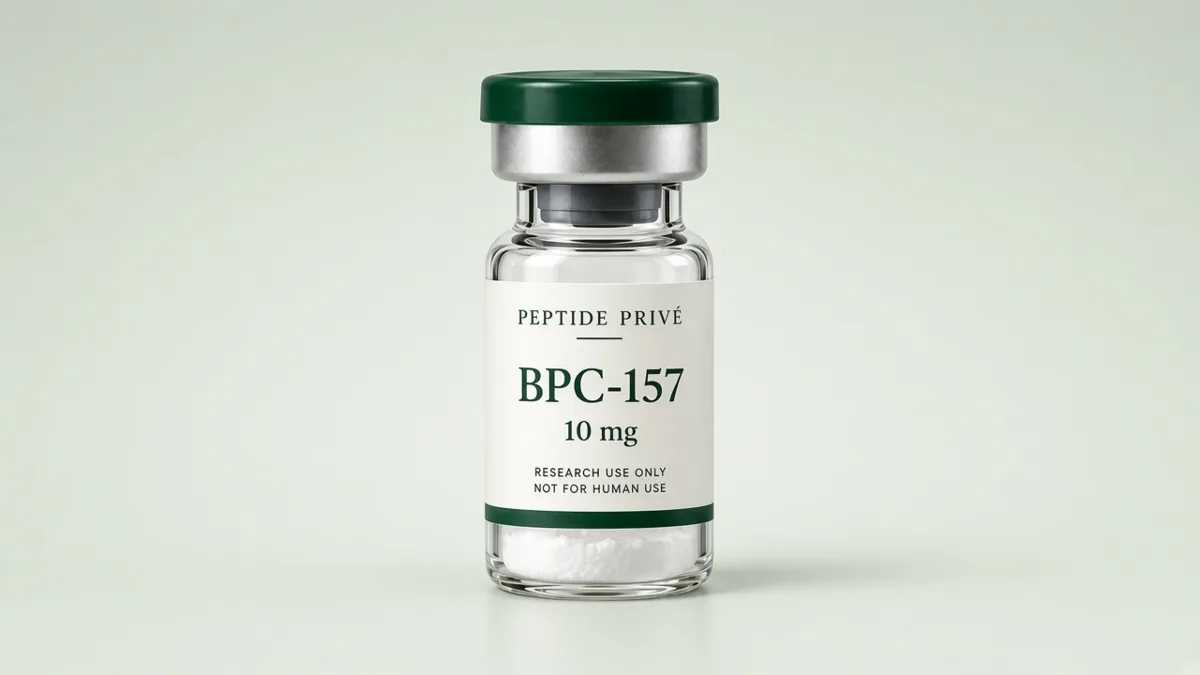
BPC-157 is one of the most frequently catalogued synthetic peptides in research supply. This profile gathers its history, identity data, sequence features, physical form and handling basics in one place, so your lab can verify every lot against a clear reference.
Origin and Naming
"BPC" stands for body protection compound. In a 1993 overview, P. Sikirić and colleagues in Croatia described a protein of roughly 40,000 molecular weight isolated from gastric juice, which they named BPC, and a 15-amino-acid fragment of it, designated BPC 157, which they synthesized and characterized (Sikirić et al. 1993). The synthetic 15-mer is the compound catalogued today as BPC-157.
In later papers the same group referred to the peptide by development codes PL 14736, PL-10 and PLD-116, associated with the Croatian pharmaceutical company Pliva, and described it as a "stable gastric pentadecapeptide" (Sikirić et al. 2006). You will see all of these names in the older literature, so it helps to search for each of them when building a reference list.
"Pentadecapeptide" is simply the systematic word for a peptide of 15 residues.
Chemical Identity
BPC-157 is a synthetic peptide of 15 amino acids. Its identity data, as listed in the PubChem public database, is summarised below.
| Property | Value |
|---|---|
| CAS number | 137525-51-0 |
| Sequence | Gly-Glu-Pro-Pro-Pro-Gly-Lys-Pro-Ala-Asp-Asp-Ala-Gly-Leu-Val |
| One-letter code | GEPPPGKPADDAGLV |
| Molecular formula | C62H98N16O22 |
| Molar mass | 1419.55 g/mol |
| Monoisotopic mass | 1418.704 Da (PubChem) |
| PubChem CID | 9941957 |
Reading the Sequence
A sequence is more than an identity string. It predicts how the molecule behaves in the vial and on the instrument.
- Proline-rich. Four of the 15 residues are proline (positions 3, 4, 5 and 8), including a Pro-Pro-Pro run. Proline restricts backbone flexibility.
- Acidic overall. There are three acidic side chains (Glu2, Asp10, Asp11) and one basic side chain (Lys7). Counting the free N-terminus and C-terminus as well, the peptide carries a net negative charge of about −2 near neutral pH.
- No oxidation-prone side chains. The sequence contains no methionine, cysteine, tryptophan, tyrosine or histidine, the residues most exposed to photo-oxidation (Pattison et al. 2012). That lowers, but does not remove, the risk from light and air.
- No asparagine or glutamine. Classic deamidation needs Asn or Gln, so that pathway is absent. The two aspartic acid residues can still slowly isomerize through a succinimide intermediate, a reaction that is much slower for Asp than for Asn (Geiger & Clarke 1987).
- An Asp-Asp pair. Aspartic acid residues are the site of aspartimide formation during Fmoc solid-phase synthesis, a well-known side reaction that can produce closely related impurities (Kong et al. 2025). It is one reason careful synthesis and purification matter for this sequence.
Physical Form
Our vialed BPC-157 is supplied as a lyophilized (freeze-dried) powder. This dry form is chosen because peptides are generally more stable as a solid than in solution. The powder should appear as a white to off-white cake or loose solid in a sealed vial.
Like most peptides purified by reversed-phase HPLC, a lyophilized peptide is a salt. The positive charges on the molecule are paired with counter-ions such as trifluoroacetate or acetate, and the powder also holds some residual water (Sikora et al. 2018). That is why the weighed mass of powder is not exactly the mass of peptide.
Storage and Handling Basics
- Store sealed vials cold, away from light and moisture.
- Allow a vial to reach room temperature before opening to limit condensation.
- Once reconstituted, keep the solution refrigerated and follow your lab's own stability protocol.
- Label every vial with its lot number and the date it was opened.
See Storing Lyophilized Peptides in the Lab for the reasoning behind each step.
What to Check on the Analytical Report
When you review a lot's analytical report, confirm that the lot number on the report matches the lot number on the vial. Then check:
| Check | What to look for |
|---|---|
| Identity by MS | Observed mass consistent with 1419.55 g/mol (average) or 1418.70 Da (monoisotopic); in ESI, ions near m/z 1419.7 for [M+H]⁺ and m/z 710.4 for [M+2H]²⁺ |
| Purity by HPLC | Main-peak share at a stated wavelength (often 214 nm), with the chromatogram |
| Related peaks | Small peaks near the main peak can be deletion sequences or aspartimide-related forms (D'Hondt et al. 2014) |
| Lot and date | Lot match, test date and laboratory named |
Our guide on How to Read a Peptide Analytical Report walks through each section.
What the Literature Covers
BPC-157 has a long publication record, but nearly all of it is preclinical.
- A 2025 systematic review screened 544 records from 1993 to 2024 and included 36 studies. Of those, 35 were preclinical (cell and animal models) and one was a small clinical report; the authors found no clinical safety data (Vasireddi et al. 2025).
- A 2026 systematic review restricted to human data found three small studies with a combined 30 participants, rated all of them as poor methodological quality, and judged the overall certainty of evidence to be very low (Poolton et al. 2026).
For a research team, the practical reading is that BPC-157 is a well-catalogued tool compound for laboratory models, with a literature dominated by rodent and cell studies. When you build a literature review, note the model, the group and the year of each study. See Dish, Mouse or Human? Reading the Model Behind a Study.
Formats and Research Context
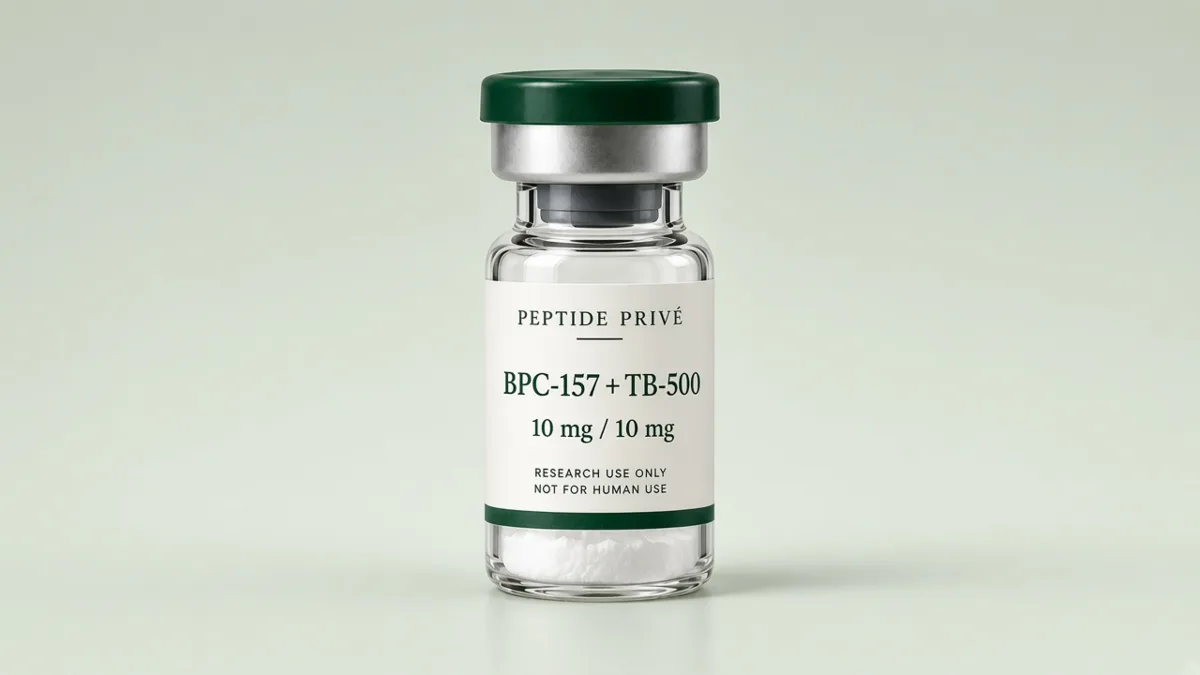
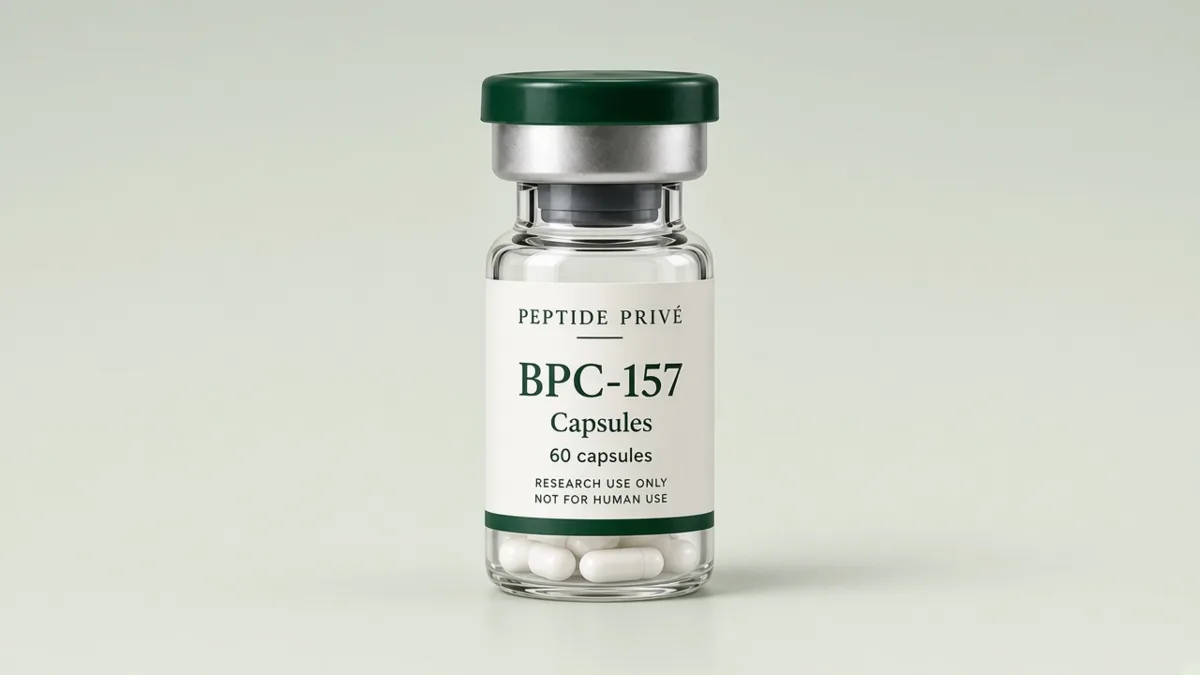
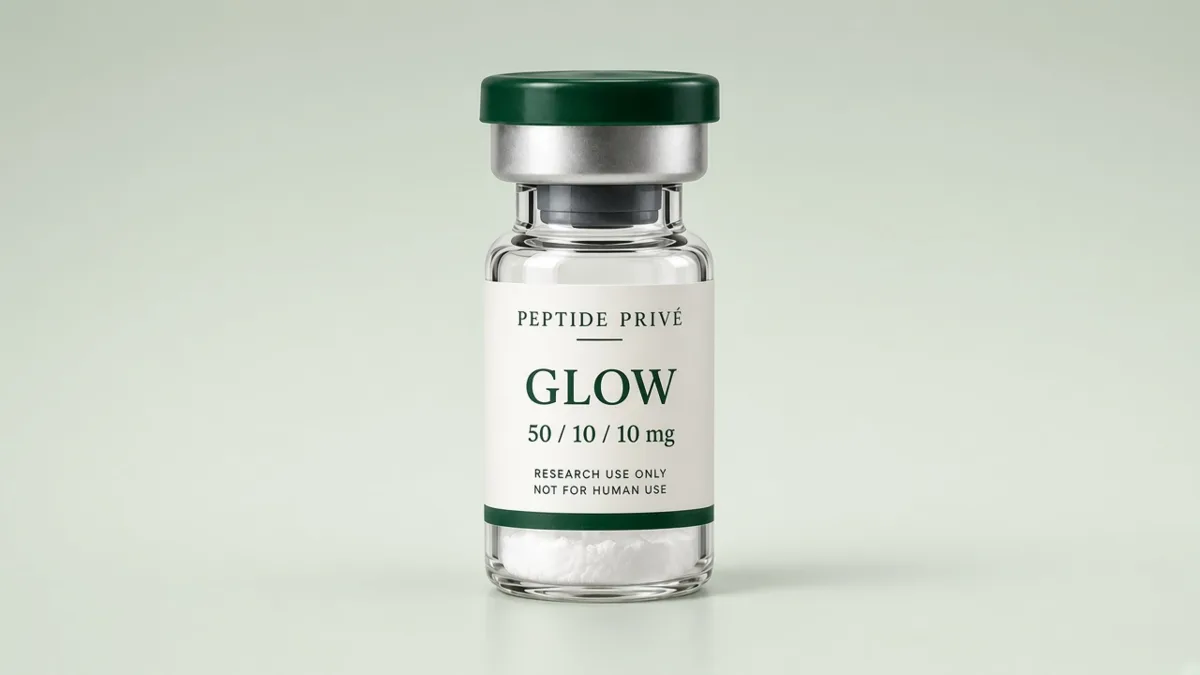
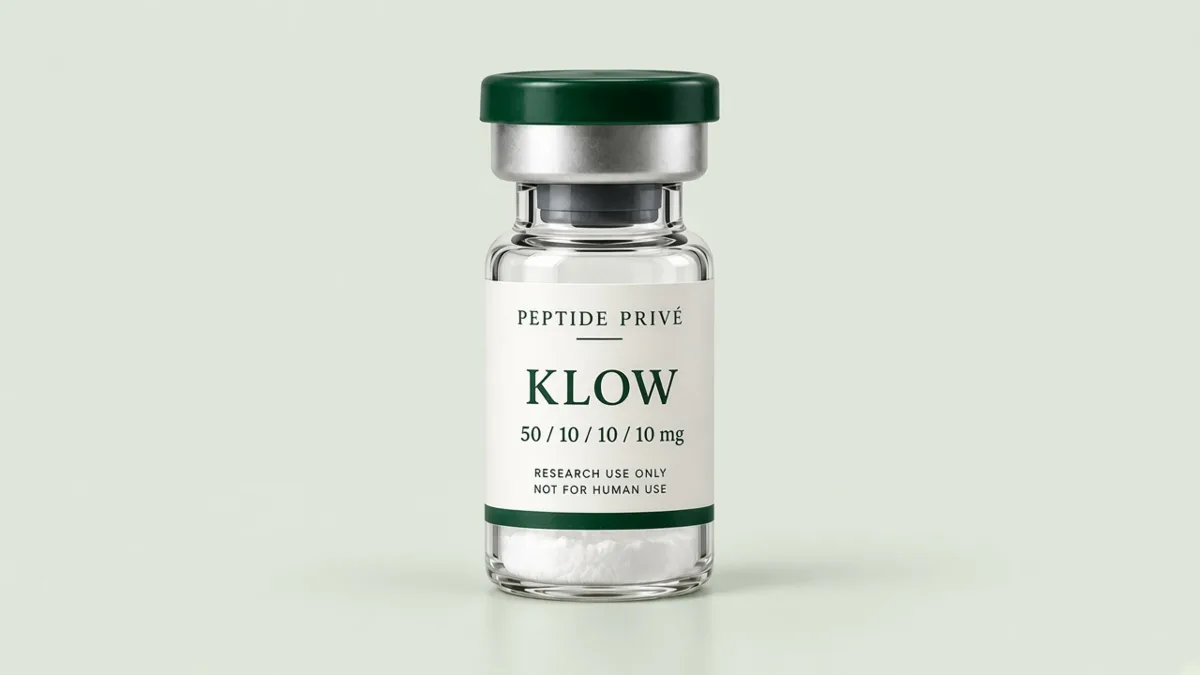
We carry BPC-157 as a 10 mg vial and as BPC-157 Capsules (60 capsules). It also appears as a component in our BPC-157 + TB-500, GLOW and KLOW blends. Our material is supplied strictly for laboratory research. Every Peptide Privé batch is tested by an independent lab. Shop all peptides or contact our team with questions.
Sources
- Sikirić P et al. J Physiol Paris. 1993. PubMed 8298609: https://pubmed.ncbi.nlm.nih.gov/8298609/
- Sikiric P et al. Inflammopharmacology. 2006. PubMed 17186181: https://pubmed.ncbi.nlm.nih.gov/17186181/
- PubChem, BPC-157 (CID 9941957): https://pubchem.ncbi.nlm.nih.gov/compound/9941957
- Pattison DI, Rahmanto AS, Davies MJ. Photo-oxidation of proteins. 2012. PubMed 21858349: https://pubmed.ncbi.nlm.nih.gov/21858349/
- Geiger T, Clarke S. Deamidation, isomerization, and racemization at asparaginyl and aspartyl residues in peptides. 1987. PubMed 3805008: https://pubmed.ncbi.nlm.nih.gov/3805008/
- Kong MJW, van den Braak TJHP, Neumann K. Aspartimide Formation and Its Prevention in Fmoc Chemistry Solid Phase Peptide Synthesis. ChemBioChem. 2025. PubMed 40857621: https://pubmed.ncbi.nlm.nih.gov/40857621/
- D'Hondt M et al. Related impurities in peptide medicines. 2014. PubMed 25044089: https://pubmed.ncbi.nlm.nih.gov/25044089/
- Sikora K et al. Counter-ion effect on antistaphylococcal activity and cytotoxicity of selected antimicrobial peptides. Amino Acids. 2018. PubMed 29307075: https://pubmed.ncbi.nlm.nih.gov/29307075/
- Vasireddi N et al. HSS J. 2025. PubMed 40756949 (full text PMC12313605): https://pubmed.ncbi.nlm.nih.gov/40756949/
- Poolton JT, Minett J, Kazmi A. Acta Orthop Belg. 2026. PubMed 42885452: https://pubmed.ncbi.nlm.nih.gov/42885452/
For in-vitro laboratory research only. Not for human or animal use.