Peptide names can look like random strings of letters and numbers. Most of them follow a handful of patterns. Knowing those patterns helps you read a label, search the literature and avoid mix-ups between similar names.
One rule applies to all of them: a name tells you where a compound came from or what it is made of. It does not tell you what it does.
Pattern 1: The Name Is the Sequence
Very short peptides are often named with one-letter amino-acid codes.
| Name | Letters | Sequence |
|---|---|---|
| GHK | G, H, K | Gly-His-Lys |
| KPV | K, P, V | Lys-Pro-Val |
These names are fully descriptive: the sequence is the name. GHK-Cu adds the chemical symbol for copper, showing that the tripeptide is bound to a copper ion.
Pattern 2: An Acronym of Where It Was Found
Some names abbreviate a description of the peptide's origin.
- MOTS-c: Mitochondrial Open reading frame of the Twelve S rRNA, type c. The name records the gene location the peptide was found in. See our MOTS-c compound profile.
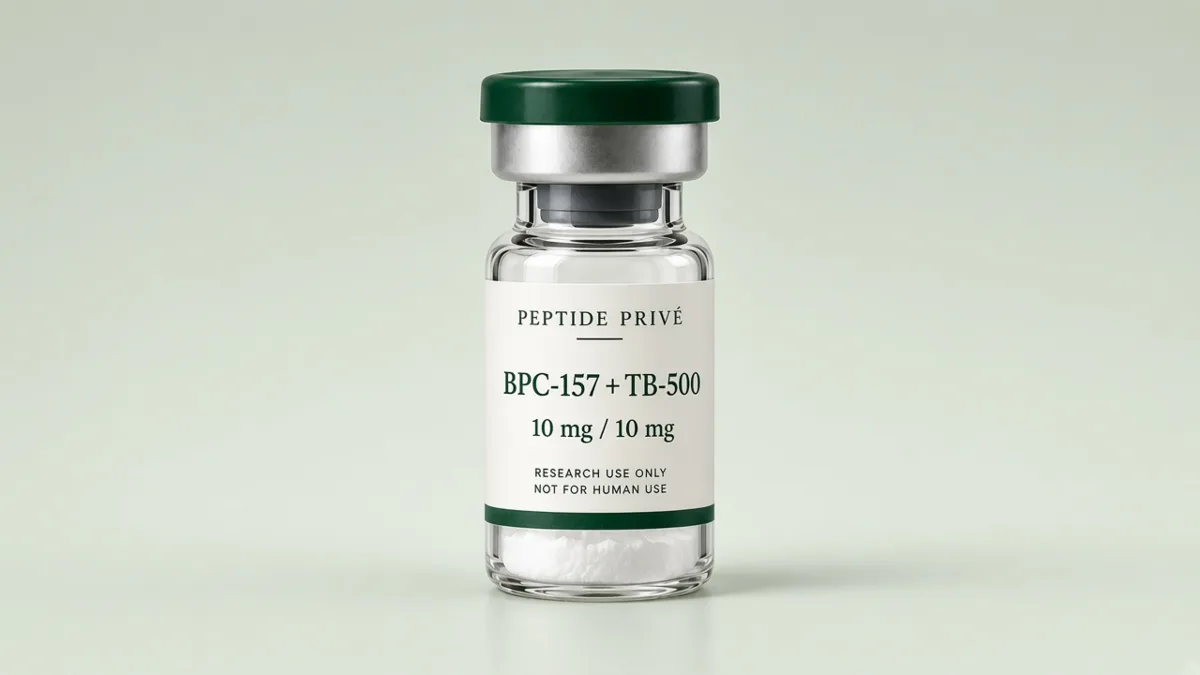
- BPC-157: "BPC" stands for body protection compound. In the research literature the compound is described as a stable gastric pentadecapeptide: a 15-residue sequence that traces back to gastric juice research. The number identifies this specific sequence. See our BPC-157 compound profile.
An acronym like "body protection" is a historical label, not a description of any effect.
Pattern 3: A Lab Code or Inventor's Initials
Many compounds keep the code they were given during development.
- SS-31: named after its developers, Szeto and Schiller, and the compound's number in their series. It is also referenced under the name elamipretide.
- TB-500: a supplier-style code used for material related to thymosin beta-4. Because codes like this are not standardized, always confirm the actual sequence and mass on the analytical report.
Pattern 4: Named After a Parent Molecule
Some names point to the larger molecule a peptide comes from.
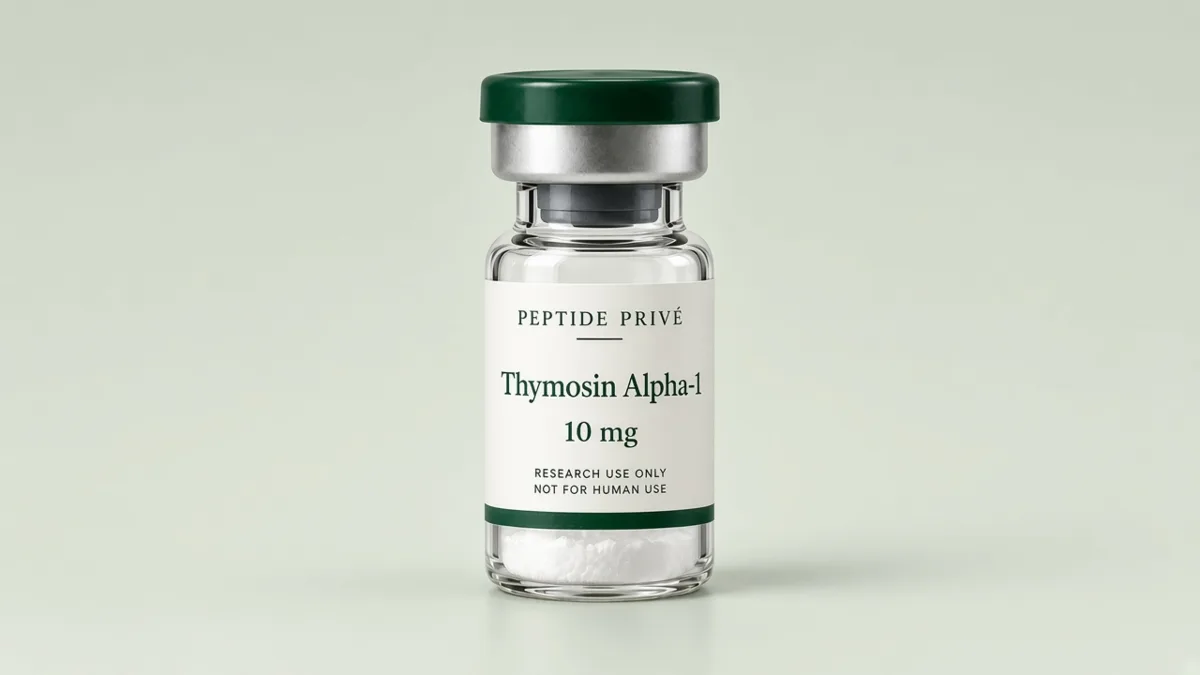
- Thymosin Alpha-1: named after the thymus, the organ from which the thymosin fractions were first isolated. A 1977 paper by Goldstein and colleagues reported the isolation and sequence of this 28-residue peptide.
- Semax and Selank: built on fragments of ACTH and tuftsin respectively. See Semax and Selank: Two Heptapeptides, One Shared Tail.
Pattern 5: Official Nonproprietary Name Stems
Compounds that receive an International Nonproprietary Name (INN) from the World Health Organization are named with standard stems that signal a chemical or functional class.
| Stem | Class described by the WHO stem book | Examples in our catalog |
|---|---|---|
| -relin (sub-stem -morelin) | Pituitary hormone-release stimulating peptides (-morelin: growth hormone release-stimulating peptides) | Sermorelin, Tesamorelin |
| -tide | Peptides and glycopeptides | Elamipretide (the INN for SS-31) |
A stem places a compound in a naming class. It is not a statement about any specific use.
Pattern 6: Numbers and Letters for Variants
Letters and numbers often mark a modified version of a known molecule. IGF-1 LR3, for example, refers to an analog of IGF-1 with a 13-residue N-terminal extension and an arginine at position 3.
Practical Tips for the Lab
- Write the full name on every label and in your records, never a nickname.
- Check synonyms (such as SS-31 and elamipretide) when searching the literature.
- When two names look alike, compare molar mass on the analytical report. Mass spectrometry separates them clearly.
FAQ
Does a peptide's name describe its effect? No. Names describe origin, structure or development history.
Why do some peptides have several names? A compound can carry a lab code, a descriptive name and an official INN at the same time.
Where do I confirm what is actually in a vial? On the lot's analytical report. See How to Read a Peptide Analytical Report.
Sources
- Lee C et al. Cell Metabolism, 2015 (MOTS-c name). PubMed 25738459: https://pubmed.ncbi.nlm.nih.gov/25738459/
- Goldstein AL et al. Proceedings of the National Academy of Sciences, 1977 (thymosin alpha-1). PubMed 265536: https://pubmed.ncbi.nlm.nih.gov/265536/
- World Health Organization, The use of stems in the selection of International Nonproprietary Names (INN) for pharmaceutical substances, 2018: https://cdn.who.int/media/docs/default-source/international-nonproprietary-names-(inn)/stembook-2018.pdf
For in-vitro laboratory research only. Not for human or animal use.